

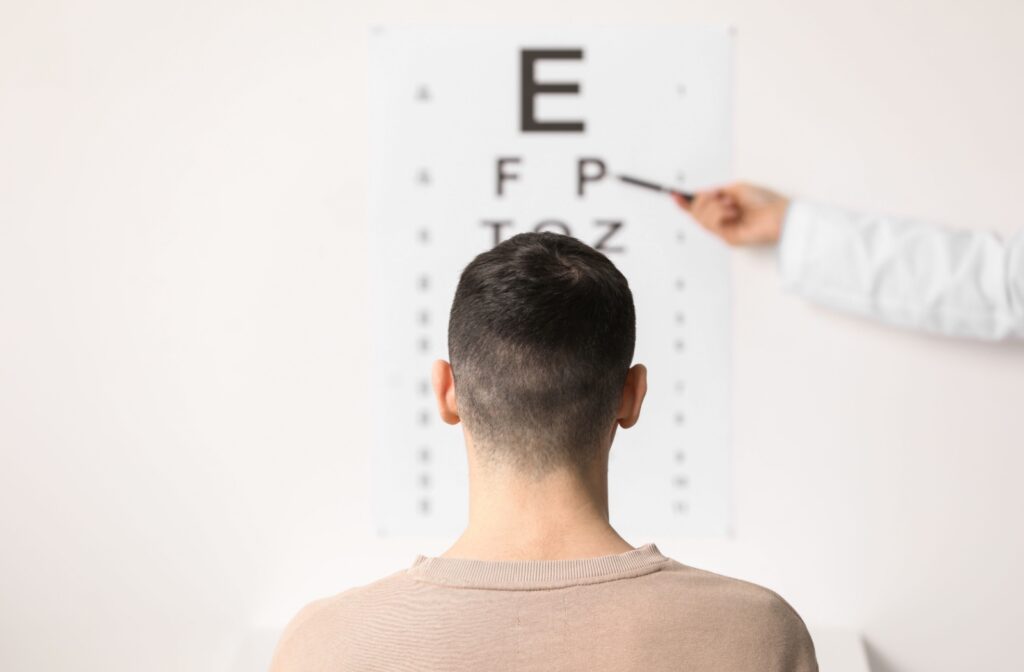
You may have enjoyed clear vision for most of your life, easily reading street signs and recognizing faces from across the room. But lately, you might notice things in the distance seem a little fuzzy. It’s a common belief that nearsightedness, or myopia, is something that only develops when you’re a child.
Nearsightedness can begin in adulthood, even if you’ve never needed glasses before. This change in your vision is known as adult-onset myopia. It’s something many people experience in their 20s, 30s, and beyond, distinguishing it from other common refractive errors.
What Is Adult-Onset Myopia?
When you hear about myopia, you probably picture a child getting their first pair of glasses. Adult-onset myopia is simply nearsightedness that appears after your teenage years. This happens when the shape of your eye changes slightly, often by growing a little longer.
This subtle change affects how your eye focuses light. Instead of light focusing directly on your retina—the light-sensitive tissue at the back of your eye—it focuses in front of it. As a result, objects far away look blurry while things up close remain clear.
How Common Is It?
If you’re noticing changes in your distance vision as a young adult, you’re not alone. It’s quite common for vision to shift during your 20s and 30s. Life changes, work demands, and daily habits can all play a part in how your eyes adapt over time.
Common Causes of Myopia in Adults
Your Daily Habits and Environment
Your everyday activities can influence your vision. Spending many hours on tasks that require you to focus up close—like working on a computer, reading on a tablet, or scrolling on your phone—can contribute to digital eye strain and changes in your vision.
At the same time, not getting enough time outdoors in natural daylight may also be a factor. Your eyes benefit from looking at different distances, and outdoor environments naturally encourage this.
Health and Family History
Your family’s health history can offer clues about your own. If your parents or siblings have nearsightedness, you may have a greater chance of developing it yourself. Many factors can lead to poor eyesight, and in some cases, changes in vision can also be related to other health conditions.

Signs of Nearsightedness
The signs of adult-onset myopia can be subtle at first, but they often become more noticeable over time. These are just a few of the key signs you should see an eye doctor. Common signs include:
- Distant objects like television screens or chalkboards seem blurry
- You experience frequent headaches or a feeling of eye strain
- You catch yourself squinting to see things far away clearly
How Your Eye Doctor Can Help
If you suspect your vision is changing, the first step is to schedule a comprehensive eye exam. This allows a professional to get a complete picture of your eye health and accurately measure any changes in your prescription.
During your visit, your eye doctor can track your vision from year to year. This helps identify patterns and provides a clear understanding of your specific needs.
Explore Your Vision Correction Options
Once your vision is measured, you have several options to see clearly again. Prescription eyeglasses can be a simple and effective way to correct blurry distance vision, providing sharp focus when you need it.
For those who prefer a glasses-free look, contact lenses are a popular alternative. There are also specialized lenses designed to help your eyes focus comfortably at both near and far distances, depending on your lifestyle.
Protect Your Vision for Years to Come
Simple Habits for Healthy Eyes
You can support your eye health with a few simple habits. When using digital screens, try the 20-20-20 rule. Every 20 minutes, look at something 20 feet away for at least 20 seconds. This gives your eyes a much-needed break from close-up focus.
Making time for outdoor activities, eating a balanced diet full of leafy greens and colorful vegetables, and maintaining a healthy lifestyle also contribute to your overall eye health.
The Role of Regular Eye Exams
Annual eye exams are an important part of any proactive health routine. They not only keep your prescription current but also help monitor the long-term health of your eyes. A regular check-up establishes a baseline, making it easier to spot changes early.
Clear Vision for Your Whole Family
Partnering with an eye doctor in Chula Vista helps you stay on top of your vision. Our Total Vision team at Pack & Bianes Optometry is dedicated to providing personalized care that fits the needs of your entire family. Schedule your appointment today to get a clear view of your eye health.
