

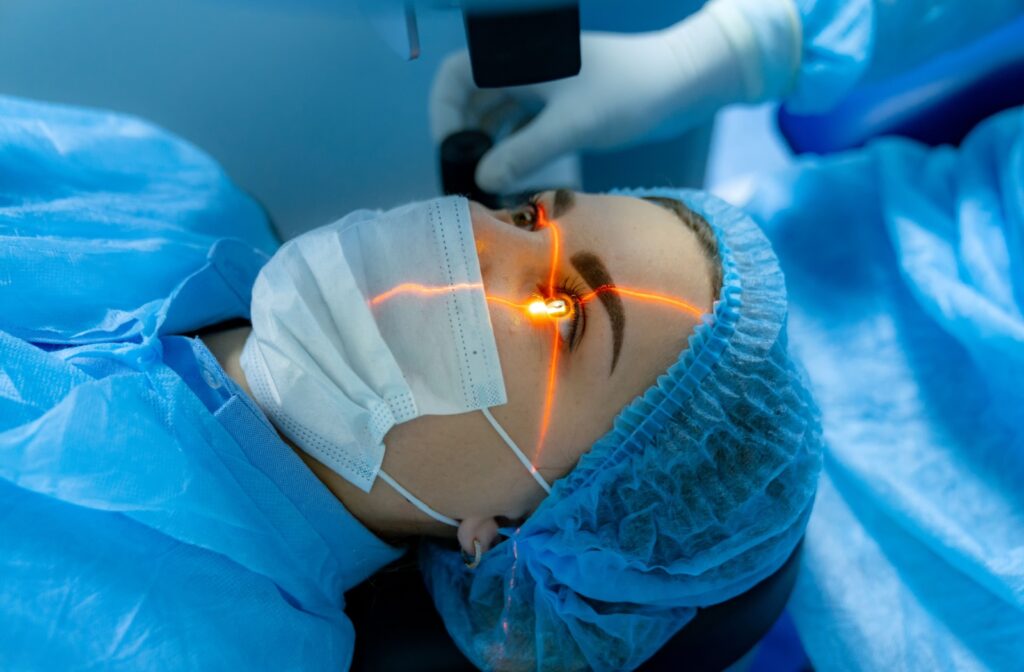
The decision to have laser eye surgery is an exciting one, as it opens up a world of possibilities for clearer vision. The recovery period is where you play an active role in achieving your desired outcome.
Following a few simple guidelines can help your eyes heal properly. The key to a smooth recovery after laser eye surgery is to avoid activities that can introduce irritants, strain, or pressure to your eyes while they heal.
As your eye doctor, we’re here to help co-manage the process.
Your First 24 Hours: Immediate Post-Surgery Care
The first day after your procedure is a time for rest. Your eyes need time to begin the healing process, so take it easy.
Rest Your Eyes & Body
Your main job is to relax and let your body heal. You should keep your eyes closed as much as possible. Napping is a great way to pass the time and help the process along.
Avoid All Contact with Water
It’s important to keep your eyes completely dry for the first day. This means you should avoid:
- Showering (but a bath is fine if you keep water well away from your face)
- Splashing your face with water
- Steam from cooking or very hot drinks
Skip the Screens for a Day
Give your eyes a complete break from digital devices. This includes your phone, computer, tablet, and television. Let your eyes heal without the added work of focus on a bright screen.
Activities to Pause During Your Recovery
As you start to feel better, you may want to return to your normal routine. However, it’s a good idea to hold off on certain activities, as doing so helps protect your eyes while they heal.
Hold Off on Strenuous Exercise
For at least the first week, avoid any high-impact exercise. This includes activities like running, lifting weights, or playing contact sports. Gentle walks are usually fine and can be a good way to get some light movement.
Steer Clear of Dusty & Smoky Places
Your eyes will be more sensitive after surgery. Environments with a lot of dust, smoke, or other airborne particles can cause irritation and lead to potential eye infections. It’s helpful to avoid such places for a few weeks.
No Swimming Pools or Hot Tubs
Water in pools, hot tubs, lakes, and oceans can contain bacteria that may lead to complications, such as a painful corneal ulcer. You’ll need to avoid swimming for several weeks. This gives your eyes the time they need to heal.
Daily Routines & Personal Care Adjustments
As part of your recovery process, you may need to change up your daily routine. A few simple adjustments can make a big difference in your comfort and recovery.
Careful Hair & Face Washing
When you shower or wash your hair, tilt your head back to keep soap and water from running into your eyes. You can wash your face with a soft cloth. Carefully avoid the eye area for the first several days.
Put Makeup & Lotions on Hold
Avoid eye makeup like mascara, eyeliner, and eyeshadow for at least one week. You should also steer clear of any lotions, face creams, or serums around the eye area. This helps keep the area clean and free from potential irritants.
Protect Your Eyes From the Sun
Your eyes will be more sensitive to light after the procedure. Wear polarized sunglasses that offer UV protection whenever you go outside, even on cloudy days. This helps reduce discomfort and protects your healing eyes from the sun’s harmful UV rays.

Screen Time, Reading & Your Eyes
After the first 24 hours, you can slowly reintroduce screen time and reading. It’s smart to listen to your body and take frequent breaks.
Ease Back into Digital Devices
When you do use a screen, keep your sessions short at first. If your eyes feel tired or dry (both common symptoms of digital eye strain), stop and let them rest. Use any eye drops that you’ve been prescribed to help with lubrication and comfort.
Choose Eye-Friendly Screens When Possible
E-readers with e-ink technology often feel more comfortable than backlit tablets or phones. That’s because these devices reflect light from the room you’re in rather than shining light into your eyes.
Remember the 20-20-20 Rule
This is a helpful habit for any screen use, both during and after recovery. Every 20 minutes, take a 20-second break to look at something at least 20 feet away. This gives your eye muscles a chance to relax.
Your Recovery Timeline & Follow-Up Care
Healing is a process that happens in stages. Everyone’s timeline is a little different, but you can generally expect a few key phases. Regular check-ins with your eye doctor are part of this journey.
The First Few Weeks
Most people notice a significant improvement in their vision within the first few days. Your vision will continue to improve and become more stable. You can resume most of your normal activities, but you should continue to avoid things like swimming and contact sports.
Long-Term Healing
It can take three to six months for your eyes to fully heal and for your vision to settle completely. During this period, continue to follow your eye doctor’s advice. Attending all follow-up appointments is an important part of the process.
Connect With Your Eye Doctor
Regular checkups allow your optometrist to see how your eyes are healing and track your progress. A consistent relationship with your eye doctor helps support a smooth recovery from start to finish. Don’t hesitate to reach out if you have questions between scheduled visits.
At Park & Bianes Optometry,, we’re here to walk with you through every step of your vision journey. From the initial consultation to your post-operative care, our focus is on your health and comfort. Contact us to schedule an appointment and learn more about your options for clear sight.
