


Your eyes run on some of the smallest arteries in your body. Those tiny vessels carry oxygen and nutrients to the cells that let you read a menu or spot a road sign at dusk.
Blood flow ties eye health to heart health, which means what lands on your plate matters more than most people expect. Leafy greens, fatty fish, nuts, and brightly colored produce feed those vessels, and building meals around them can support your eyes and help protect your vision as you age. Most of them probably already sit in your fridge.
Why Food Matters for Your Eye Health
Your retina uses a large amount of oxygen for its size, and it depends on a dense web of tiny vessels to get it. Keep those vessels healthy and nutrients reach the cells that turn light into the images you see.
Conditions like macular degeneration develop slowly, sometimes over decades. Research on eye nutrition points to diet as one of the factors within your control.
5 Fruits and Vegetables That Support Eye Health
Color works well as a shopping guide. Aim for produce across the spectrum, and start with these:
- Carrots. They carry beta-carotene, which your body converts into vitamin A for low-light vision.
- Sweet potatoes. Bake one alongside dinner for another solid source of vitamin A.
- Kale. Toss a handful into soup or scrambled eggs for lutein and zeaxanthin, 2 nutrients that collect in your retina and help filter harsh light.
- Bell peppers. Eat them raw when you can, since heat lowers their vitamin C.
- Oranges. Vitamin C supports the walls of the small vessels feeding your eyes.
Looking for some bonus fruits and veggies? Cantaloupe, strawberries, broccoli, and Swiss chard belong in the rotation too.
5 Proteins and Nuts That Feed Your Eyes
The protein side of your plate brings a different set of nutrients.
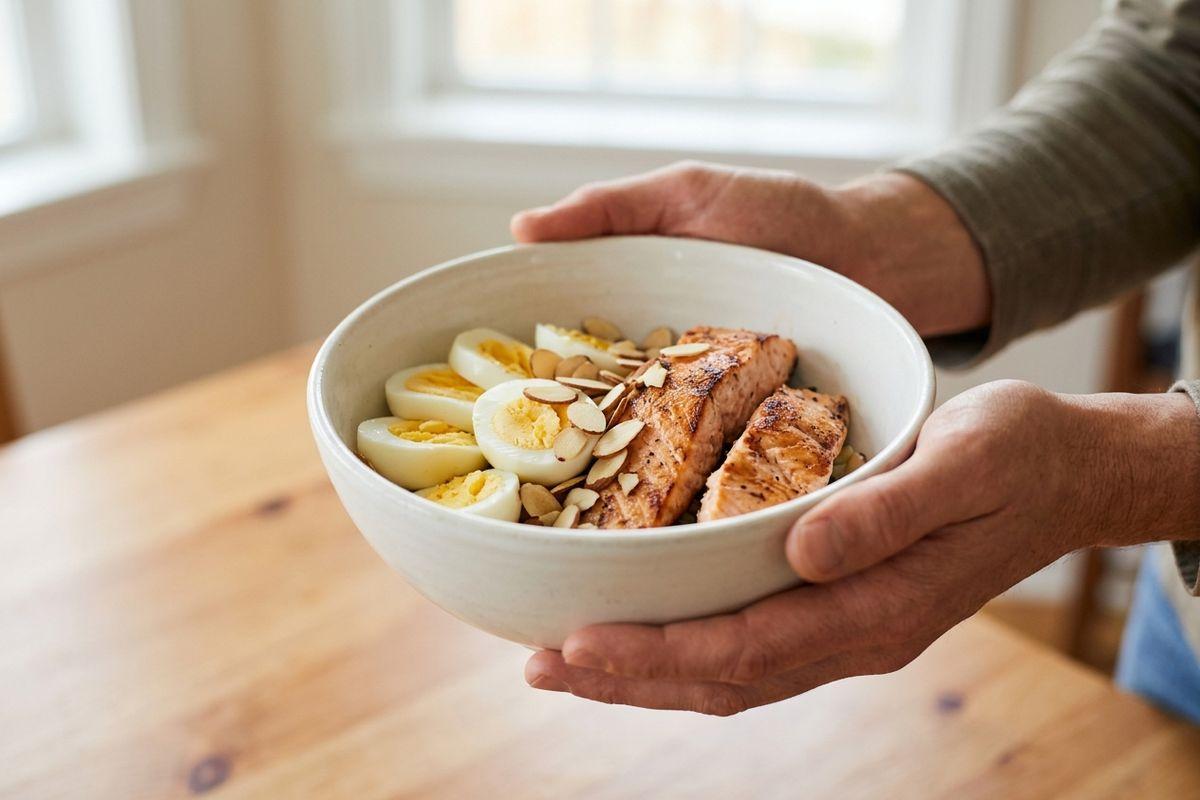
- Salmon. Omega-3 fatty acids support the oily layer of your tear film, which can ease dryness.
- Trout. A milder option if salmon isn’t your favorite, with a similar omega-3 profile.
- Almonds. A small handful gives you vitamin E, an antioxidant that helps shield eye cells.
- Eggs. The yolk pairs lutein with zinc, and its fat helps your body absorb both.
- Oysters. Zinc moves vitamin A from your liver to your retina, and oysters supply plenty of it.
Beans, sunflower seeds, and canned tuna deliver similar nutrients for a lot less money.
How These Nutrients Protect Your Sight
Each nutrient plays a role you can feel in daily life:
- Vitamin A helps you see in low light and keeps the surface of your eyes moist.
- Antioxidants like vitamin C and vitamin E help shield eye cells from daily wear.
- Omega-3s are tied to fewer symptoms of dry, gritty eyes.
- Zinc helps your body move vitamin A where your retina needs it.
Together, these nutrients can help your eyes handle long stretches of screen time, bright afternoons, and the switch from your phone to the road at dusk.
What Weakens Your Eyesight Over Time
Some habits wear on your eyes so gradually that nothing feels wrong until years later. A few worth paying attention to:
- Fried and heavily processed foods increase oxidative stress on eye cells.
- Cigarette smoke damages the vessels that supply your retina.
- Heavy sun exposure without UV-blocking lenses adds up season after season.
- Diets low in leafy greens miss the lutein and zeaxanthin your retina stores.
One better choice a day can change that balance over months. A handful of spinach at lunch counts, and so does fruit instead of chips.
Simple Diet Swaps for Every Age
You don’t need to rebuild your menu, and small changes hold up better over time anyway.
Add greens to 2 meals a week. Keep cut peppers or baby carrots in the fridge at eye level, where you’ll grab them before anything else. Swap one dinner for fish and you’ve covered your omega-3s for the week.
Young eyes benefit from the same approach, so build the habit early with growing kids rather than fighting about vegetables later. Older adults have even more reason to pay attention, since the risk of age-related conditions climbs with time.
When to See an Eye Doctor in Chula Vista
Food is one piece of the puzzle. Regular checkups fill in the rest.
Schedule routine comprehensive exams so the team can spot changes before you notice them. Share your family history of eye conditions, since some issues run in families and can guide how often you visit. New blurriness, dryness that won’t settle down, or trouble seeing at night are all reasons to see one of our optometrists sooner.
Pair Good Food with Regular Eye Exams
Start with one meal. Add greens tonight and put fish on the shopping list this week. Your eyes rely on what you feed them, and small changes made now may pay off for decades.
At Total Vision Terra Nova, we help families, adults, and seniors build eye care habits that stick. Book your next comprehensive eye exam and let’s talk about what your eyes need.